By Jake Morrison | Published: April 2, 2026 | Updated: April 2, 2026
Most barns are designed by people who have never mucked one out at 5 AM in February. They look beautiful in magazines but create daily misery for the people who actually work in them. I have managed barns that were architectural showpieces and barns that were functional workhorses. The functional ones always had happier horses, healthier staff, and lower operating costs.
This article covers the design principles that reduce labor, improve horse health, and create a barn that works as hard as the people and animals inside it. Every decision here is based on years of daily barn management, not theoretical ideals.
Layout: The Foundation of Efficiency
A barn’s layout determines how many steps you take, how much time you spend, and how safely you can work. Poor layout adds hours to every day and increases the risk of injury.
The Central Aisle
A wide central aisle — minimum 12 feet, preferably 14 — is non-negotiable. It allows horses to pass each other safely, accommodates equipment movement, and provides space for emergency handling. Narrow aisles create bottlenecks, spooking risks, and daily frustration.
The aisle should be straight and unobstructed from end to end. Curved aisles, pillars in the center, or offset doorways create collision points and reduce visibility. A straight line is the shortest, safest, and most efficient path.
Stall Placement
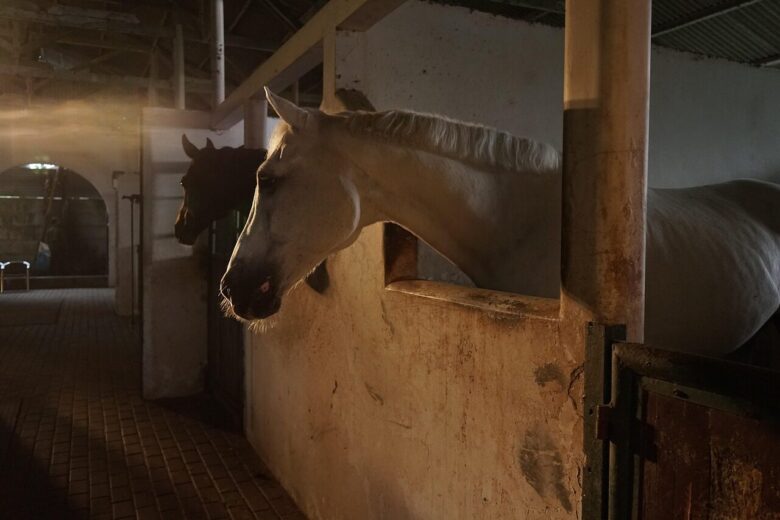
Stalls should face the aisle directly, not at angles. Angled stalls look interesting but make bedding delivery, manure removal, and horse handling awkward. Each stall needs a minimum 4-foot clearance in front for safe cross-tying and veterinary work.
Group stalls by compatibility. Horses that get along should be neighbors. Horses that do not should be separated by at least one stall and a solid wall. Visual contact is important for social well-being, but direct contact through bars can lead to biting, kicking, and fence-walking.
Feed and Tack Rooms
Place the feed room at the center of the barn, not at an end. The person delivering feed should walk the shortest possible distance to every stall. A feed room at one end of a 20-stall barn adds hundreds of steps per day — thousands per week — and increases fatigue and injury risk.
The tack room should be adjacent to the grooming area, which should be adjacent to the wash rack. The workflow is: groom, tack, ride, untack, wash, return to stall. Each step should flow logically to the next without backtracking.
Stall Design: Health and Maintenance
Size and Dimensions
Minimum stall size for an average horse (15–16 hands) is 12×12 feet. Larger horses need 12×14 or 14×14. Ponies can manage 10×12, but 12×12 is better for resale and flexibility. A stall that is too small restricts movement, increases bedding costs, and creates behavioral issues like weaving and stall-walking.
Flooring
The ideal stall floor is durable, drainable, and forgiving. My preference, in order:
| Flooring Type | Pros | Cons | Maintenance |
|---|---|---|---|
| Compacted gravel with mats | Excellent drainage, affordable, easy on legs | Requires proper grading and compaction | Annual leveling, mat replacement every 5–8 years |
| Concrete with thick mats | Durable, easy to disinfect, impervious to urine | Hard on joints, cold in winter, requires excellent bedding | Daily bedding management, mat inspection for wear |
| Interlocking rubber pavers | Good drainage, comfortable, easy to install | More expensive upfront, can shift if base fails | Occasional releveling, joint cleaning |
| Clay or dirt | Natural, soft, cheap | Turns to mud, harbors bacteria, hard to sanitize | Constant replenishment, difficult to keep clean |
Whatever flooring you choose, slope it slightly toward a drain or the aisle to prevent urine pooling. Standing urine destroys hooves, creates ammonia, and increases respiratory disease.
Ventilation
Poor ventilation is the single biggest health risk in stabled horses. Ammonia from urine, dust from bedding and hay, and airborne pathogens accumulate in closed barns, causing respiratory disease, reduced performance, and chronic coughs.
Design for natural ventilation first:
- High ceilings — minimum 10 feet at the eaves, 14–16 feet at the ridge
- Ridge vents or cupolas that allow hot air to escape
- Windows that open at horse height, not just human height
- Stall fronts that are partially open (grills or yokes) rather than solid walls
- End-wall doors that can be opened completely in summer
Supplement with mechanical ventilation if natural airflow is insufficient. Ceiling fans improve air circulation but must be out of horse reach and designed for barn environments (sealed motors, no exposed blades).
Manure Management: The Hidden Cost
Manure management is where most barn designs fail. A barn that produces 50 pounds of manure per horse per day needs a system that removes it efficiently, stores it safely, and disposes of it economically.
Manure Pits and Storage
Locate manure storage downwind and downhill from the barn and any water sources. A concrete pad with 6-inch curbs prevents runoff and leaching. Cover the pile to prevent nutrient loss and reduce flies. A covered, 3-bin composting system turns manure into sellable compost in 3–6 months.
Stall Cleaning Efficiency
Design stalls for quick, thorough cleaning:
- Smooth walls that do not trap bedding in corners
- Removable feed and water buckets that can be taken out for cleaning
- Floor drains in wash racks and grooming areas
- Wide doorways that accommodate wheelbarrows and bedding carts
- Adequate lighting — minimum 20 foot-candles at floor level — for early morning and evening work
A well-designed stall can be completely stripped and rebedded in 10 minutes. A poorly designed stall takes 20 minutes and leaves corners dirty. Multiply that by 20 stalls twice daily and you have saved 6–7 hours of labor every day.
Water Systems: The Most Critical Infrastructure
Water is the most important nutrient and the most common point of failure. A horse needs 5–10 gallons of clean water daily, more in heat or work. A water system that fails for 12 hours in summer creates a health emergency.
Automatic Waterers
Automatic waterers reduce labor and ensure constant availability. Choose models with:
- Heating elements for freeze protection
- Large bowls that do not restrict drinking
- Easy access for cleaning and maintenance
- Backup manual fill capability if the automatic system fails
Place waterers at the front of the stall, not the back. Horses drink more when water is visible and accessible from the aisle. Check automatic waterers daily — they can malfunction, clog, or freeze without obvious signs.
Bucket Systems
If using buckets, use the largest practical size — 5-gallon buckets minimum. Hang them at chest height, not ground level, to reduce contamination. Use snap hooks or safety ties that release if the horse catches a leg. Check and refill twice daily minimum, more in hot weather.
Lighting and Electrical Safety
Barn fires are catastrophic and often caused by electrical failures. Design electrical systems with safety as the primary concern.
Lighting Design
Install LED lighting throughout. LEDs produce less heat, use less electricity, and last longer than incandescent or fluorescent bulbs. Aim for:
- 20 foot-candles in stalls and aisles
- 30 foot-candles in grooming and wash areas
- 10 foot-candles in feed and storage rooms
- Motion-sensor lighting in rarely used areas to save energy
Place switches at both ends of long aisles. No one should have to walk through a dark barn to turn on lights.
Electrical Safety
- Use only sealed, weatherproof outlets and fixtures
- Install ground fault circuit interrupters (GFCIs) on all circuits
- Keep all wiring in conduit, exposed for inspection
- Place electrical panels outside the barn in a weatherproof enclosure
- Install a master shutoff switch at the barn entrance
- Have the system inspected annually by a licensed electrician
Fire Safety
Barn fires move fast. A wooden barn with hay storage can be fully engulfed in 10 minutes. Design for prevention, detection, and evacuation.
Prevention
- Store hay in a separate building, not in the loft above stalls
- Prohibit smoking anywhere on the property
- Install lightning protection on all barns
- Keep aisles clear of equipment, bedding bags, and clutter
- Store fuels and chemicals in a detached shed
Detection
- Install smoke detectors in hay storage, feed rooms, and tack rooms
- Connect detectors to a monitoring system that alerts you remotely
- Test detectors monthly and replace batteries annually
Evacuation
- Design multiple exits from every area of the barn
- Keep halters and lead ropes at every stall door
- Post an evacuation plan with designated handlers for each horse
- Practice fire drills at least annually
- Ensure driveways and access roads can accommodate fire trucks
FAQ
What is the most cost-effective flooring for a new barn?
Compacted gravel with rubber mats offers the best balance of cost, comfort, and maintenance. It drains well, is easy on horse legs, and lasts 5–8 years with proper care. Avoid concrete unless you are prepared to invest in thick, high-quality mats and excellent bedding management.
How much ventilation does a barn really need?
As much as possible without creating drafts at horse level. The goal is 4–6 air changes per hour. If you can smell ammonia when you enter the barn, ventilation is inadequate. If horses are coughing or have nasal discharge, ventilation is inadequate. When in doubt, add more.
Should I build a barn with a hay loft?
No. Hay lofts are fire hazards, create dust problems, and add structural load. Store hay in a separate, detached building with good ventilation and fire separation. The small convenience of a loft is not worth the risk.
How do I make an old barn more efficient?
Start with ventilation: add ridge vents, open windows, and install fans. Improve lighting with LED retrofits. Add rubber mats to concrete floors. Reorganize layout to reduce walking distance. Install automatic waterers. These changes pay for themselves in reduced labor and improved horse health.
Final Thoughts
A well-designed barn is invisible. It does not impress visitors with architecture. It impresses workers with functionality. The horses are healthier. The staff is happier. The bills are lower. And the daily grind of barn management becomes manageable rather than miserable.
Design for the people and animals who will use the space 365 days a year. Plan for the worst weather, the longest days, and the emergencies you hope never happen. A barn that works in February at 5 AM is a barn that works forever. And once you have the barn built, the next priority is making sure you and your horses are prepared for whatever comes — whether that is a daily schooling session or an unexpected trail ride. Having the right safety gear and preparation protocols is just as important as having the right walls and roof.
Disclaimer: The content on this page is for informational purposes only and is not a substitute for professional architectural or engineering advice. Barn construction should comply with local building codes, fire regulations, and environmental requirements. Consult licensed professionals for structural design, electrical systems, and fire safety planning.