By Jake Morrison | Published: January 8, 2026 | Updated: January 8, 2026
The horse’s digestive system is a paradox. It is elegant in design, fragile in practice, and almost always under assault by the way we keep horses in modern barns. Ulcers are not a rare disease. They are an epidemic. Studies consistently show that 60–90 percent of performance horses have gastric ulcers, and the numbers are nearly as high for pleasure horses kept in typical stable conditions.
I have managed barns where ulcer prevention was an afterthought, and I have managed barns where it was the first priority. The difference in horse behavior, condition, and vet bills is staggering. This guide covers how the equine digestive system actually works, why ulcers develop, and the specific management changes that prevent them without breaking your budget.
How the Equine Digestive System Actually Works
To understand ulcer prevention, you need to understand the system you are protecting. Horses are hindgut fermenters with a small stomach relative to their body size. Their entire digestive strategy evolved for continuous grazing, not twice-daily meals.
The Stomach: Where Ulcers Begin
The horse’s stomach is small — roughly 8–15 liters in capacity — and divided into two distinct regions:
- Squamous region (upper third): Lined with squamous epithelium, similar to skin. It has no natural defense against acid. This is where most ulcers form.
- Glandular region (lower two-thirds): Lined with glandular mucosa that secretes acid, enzymes, and protective bicarbonate-rich mucus. This region is naturally resistant to acid but can ulcerate under severe stress or from NSAID overuse.
The stomach produces acid continuously, 24 hours a day. In a grazing horse, the constant intake of forage and saliva buffers that acid. In a stalled horse fed twice daily, the stomach sits empty for hours, bathing the squamous mucosa in hydrochloric acid with no protection. That is the mechanism. Everything else is just a trigger.
The Hindgut: Where Fermentation Happens
The cecum and colon house billions of microbes that break down fiber into volatile fatty acids — the horse’s primary energy source. This system is efficient but sensitive. Sudden feed changes, high starch loads, or antibiotic use can disrupt the microbial population, causing colic, diarrhea, or laminitis.
Healthy hindgut function depends on:
- Consistent forage intake to maintain microbial populations
- Gradual feed transitions to prevent microbial shock
- Adequate water intake to keep fiber moving through the tract
- Low starch and sugar levels to prevent acidosis in the cecum
Why Ulcers Develop: The Modern Management Problem
Ulcers are not caused by a single factor. They are caused by the cumulative effect of management practices that ignore the horse’s digestive biology. Here are the primary risk factors:
| Risk Factor | Mechanism | Prevention Strategy |
|---|---|---|
| Intermittent feeding | Stomach sits empty, acid attacks squamous mucosa | Free-choice forage, slow feeders, multiple small meals |
| High-grain diets | Increases gastric acid production and volatile fatty acid load | Maximize forage, minimize concentrates, use low-starch feeds |
| Stress and confinement | Cortisol increases acid secretion and reduces mucosal blood flow | Maximize turnout, stable companions, consistent routines |
| Intense exercise | Abdominal compression pushes acid into squamous region | Feed before work, avoid intense exercise on empty stomach |
| NSAID use | Reduces prostaglandins that protect glandular mucosa | Use only when necessary, always with food, consult vet |
| Transport and competition | Disrupted feeding, stress, dehydration, and confinement | Plan feed stops, offer hay during transport, maintain routines |
Feeding Strategies for Ulcer Prevention
Forage First, Always
Forage is the foundation of ulcer prevention. It provides bulk that fills the stomach, saliva that buffers acid, and fiber that maintains hindgut health. The minimum forage intake for ulcer prevention is 1.5–2 percent of body weight daily in dry matter. For a 500 kg horse, that is 7.5–10 kg of hay or equivalent pasture.
Free-choice forage is ideal. If your horse is overweight or prone to laminitis, use a slow feeder net with small holes to extend eating time without increasing total intake. The goal is not volume alone. It is time spent chewing and producing saliva.
Alfalfa as a Buffer
Alfalfa hay and chaff have higher calcium and protein content than grass hays, which increases buffering capacity in the stomach. Research shows that feeding alfalfa before exercise significantly reduces acid exposure in the squamous region. I feed 1–2 kg of alfalfa chaff 30–60 minutes before work to all horses in moderate to heavy training. It is the cheapest ulcer prevention strategy I know.
Grain and Concentrate Management
High-grain diets increase ulcer risk in two ways: they reduce forage intake relative to total calories, and they stimulate more acid secretion than forage-based diets. If your horse needs concentrates for energy, follow these rules:
- Never feed more than 0.5 kg of grain per meal
- Split total concentrate into 3–4 meals minimum
- Feed concentrates after forage, never on an empty stomach
- Choose low-starch, high-fiber feeds with fat-based calories
- Avoid high-molasses sweet feeds that spike acid production
Water Access
Dehydration concentrates stomach acid and slows gut motility. Horses should have access to clean, fresh water at all times. In winter, check that water sources are not frozen. In summer, monitor intake during heat — horses in work may need 40–60 liters daily. Adding loose salt or electrolytes encourages drinking and supports saliva production.
Management and Environment
Turnout Time
Turnout is not just exercise. It is digestive therapy. Horses at pasture graze continuously, move frequently, and maintain lower cortisol levels than stalled horses. Even 4–6 hours of daily turnout significantly reduces ulcer risk compared to full-time stabling. If full turnout is not possible, prioritize morning turnout when horses are most active grazers.
Social Contact
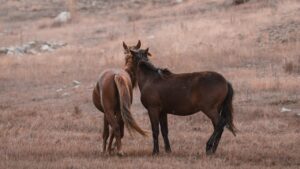
Horses are social animals. Isolation increases stress, which increases cortisol, which increases acid secretion. Horses kept in stalls with visual and physical contact with other horses show lower ulcer incidence than horses kept in isolation. If your barn layout allows, stable horses where they can see and touch neighbors. Even a goat or donkey companion helps.
Consistent Routine
Horses anticipate feeding times. A horse that knows hay arrives at 7 AM and 4 PM will start producing acid in anticipation. A horse that is fed unpredictably produces acid continuously without the buffering effect of food. Feed at the same times daily. If you must change the schedule, do it gradually over several days.
Transport and Competition Protocol
Transport is a high-risk period for ulcer development. The combination of confinement, vibration, noise, and disrupted feeding creates a perfect storm. Before long trips:
- Feed a meal of alfalfa or grass hay 2–3 hours before loading
- Offer hay in a net during transport
- Stop every 3–4 hours for water and grazing if possible
- Maintain the same hay type at the destination to avoid microbial disruption
- Allow 24 hours of rest and normal feeding before demanding work
Recognizing Ulcer Symptoms Early
Ulcers are often silent until they are severe. Early signs are subtle and easily mistaken for behavioral issues or training problems. Watch for:
- Attitude changes: Irritability, resistance to work, or generalized grumpiness, especially during girthing or mounting
- Appetite fluctuations: Leaving grain untouched while eating hay, or vice versa
- Weight loss or poor condition: Despite adequate feed intake
- Recurrent mild colic: Especially after eating or during exercise
- Excessive salivation or lip smacking: Attempts to buffer acid orally
- Stiffness or reluctance to bend: Gastric discomfort mimics back pain
- Recurrent loose manure or diarrhea: Hindgut disturbance from acid imbalance
If you notice two or more of these signs, consult your veterinarian. Diagnosis requires gastroscopy — passing a camera into the stomach — which is the only definitive method. Do not treat based on suspicion alone.
Medical Treatment vs. Prevention
When Treatment Is Necessary
Confirmed ulcers require veterinary treatment. The standard protocol is omeprazole, a proton pump inhibitor that reduces acid production. Treatment typically lasts 28 days, followed by a recheck gastroscopy to confirm healing. Omeprazole is effective but expensive — $30–$60 per day for a full-sized horse. Prevention is vastly cheaper than treatment.
What Prevention Looks Like
Prevention is not a single product. It is a management system. The most effective prevention programs combine:
- Free-choice forage or frequent small meals
- Alfalfa before exercise
- Maximum turnout with social contact
- Low-starch, high-fiber diet
- Consistent routine and minimal stress
- Judicious NSAID use only under veterinary guidance
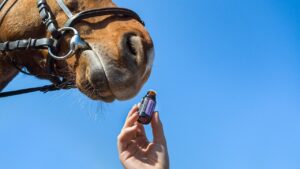
Supplements marketed for gastric health — antacids, pectin-lecithin complexes, probiotics — may provide minor support but cannot replace proper management. If your barn management is poor, no supplement will prevent ulcers. If your management is good, supplements are usually unnecessary.
FAQ
How do I know if my horse has ulcers without a vet exam?
You cannot know definitively without gastroscopy. The symptoms overlap with many other conditions: back pain, dental issues, musculoskeletal problems, and behavioral issues. If you suspect ulcers based on the signs described above, call your veterinarian. Treating the wrong condition wastes money and delays proper care.
Can I prevent ulcers with supplements alone?
No. Supplements may provide minor buffering or mucosal support, but they cannot compensate for an empty stomach, high stress, or poor feeding management. Focus on forage, turnout, and routine first. Use supplements only as adjuncts, not primary prevention.
Does my horse need omeprazole before every competition or travel?
Some veterinarians recommend prophylactic omeprazole during high-risk periods like transport and competition. This is a medical decision based on your horse’s history, current management, and the specific event. Discuss it with your vet. Do not self-prescribe.
Can ulcers come back after treatment?
Yes, and they often do if management does not change. Omeprazole heals the existing ulcers but does not fix the conditions that caused them. I have seen horses treated three times in two years because the owner refused to change feeding schedules or increase turnout. Prevention is permanent. Treatment is temporary.
Final Thoughts
Equine digestive health is not complicated. It is inconvenient. The horse’s body tells us exactly what it needs: continuous forage, social contact, movement, and low stress. Modern barns often provide the opposite: intermittent meals, isolation, confinement, and unpredictable routines. Ulcers are the predictable result.
The barns I manage with the healthiest horses are not the ones with the most expensive supplements or the fanciest facilities. They are the ones where the horses spend the most time outside, eat the most hay, and live in the most consistent environment. That is the standard. Everything else is detail.
Start with one change. Add a slow feeder. Extend turnout by an hour. Feed alfalfa before work. Measure the results in your horse’s attitude, condition, and vet bills. The data will tell you what works. And if you are building or renovating a barn, remember that the physical environment plays a huge role in digestive health — from ventilation that reduces stress to layout that maximizes turnout efficiency. Learn more about designing a barn that supports horse health in our guide to low-maintenance, high-efficiency stable design.
Disclaimer: The content on this page is for informational purposes only and is not a substitute for professional veterinary advice, diagnosis, or treatment. Always consult a qualified equine veterinarian before diagnosing or treating suspected ulcers or digestive conditions.